Hosted by Jabir Ahmad · TourismShift Conversations
TourismShift Conversations shares practical knowledge, professional experience, and thoughtful perspectives from people helping shape tourism around the world.
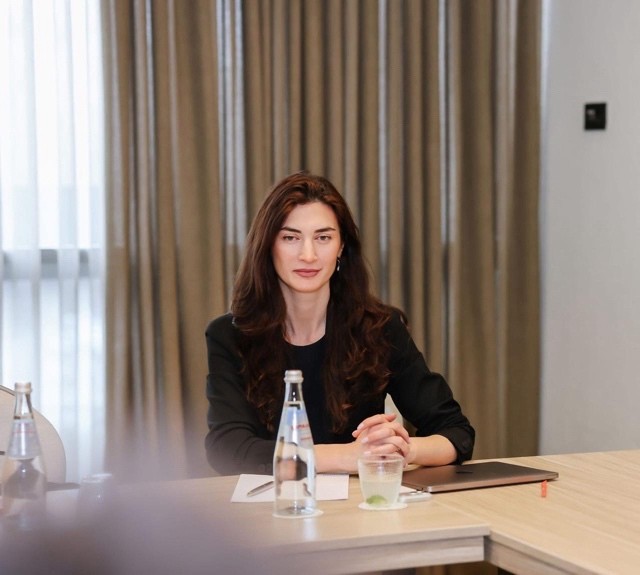
In this conversation, Teona Nemsitsveridze — Sustainable Tourism & Hospitality Strategist, standards advocate, and destination development expert — reflects on entrepreneurship, tourism standards, community partnership, and what it takes to move sustainability from aspiration to structured practice.
There are no right or wrong answers in these interviews. What follows are Teona’s own experiences and reflections, prepared in TourismShift’s editorial style for launch audiences.
What experiences have most influenced the way you think about tourism today?
For me, all of these experiences are interconnected. I believe the greatest strength of the tourism industry is people. People create destinations, build businesses, and shape both demand and supply.
Looking back, what has most influenced the way I think about tourism today is my direct, hands-on experience running my own private tourism company, which has been operating in the market for 20 years. Having my own business allows me to keep my finger on the pulse and sell destinations that truly need support — places with unique tourism resources and wonderful people who have great potential, but lack visibility and marketing.
When I personally encountered the realities of unregulated tourism, issues like inefficient waste management and unemployed local residents have always deeply concerned me. Instead of just pointing out the gaps, I chose to step up and be part of the solution.
That is what led me to my current role. Today, I’m supporting destinations in their sustainable development and helping the private sector position itself more strategically and competitively. Through my conference, I am giving the floor to international experts and organisations to bring their expertise to the audience, and discuss the challenges and solutions that standards have brought to the industry.
Ultimately, my perspective has evolved toward sustainable tourism and net-positive hospitality. It is about empowering people, fostering strong leadership, and designing systems where local communities, businesses, and destinations can all flourish together. Looking back, I have come to realise that sustainable tourism is not just about protecting places — it is about developing people awareness, building leadership, and creating systems that allow communities, businesses, and destinations to thrive together.
What distinguishes destinations and businesses that successfully integrate sustainability from those where it remains mostly an aspiration?
The difference lies in a long-term perspective. Successful destinations and businesses build structure and measurable standards to ensure viability.
For those where sustainability remains merely an aspiration, the hidden cost is immense: a short life cycle, higher expenses, and inefficiency.
Conversely, businesses that successfully integrate sustainability build their own resilient ecosystems, achieving financial independence through their environment and products. Today, we aim even higher toward a “net-positive” impact — giving back more to the Earth than we take. Just imagine the ambition of running a business whose very existence leaves the planet better than it found it.
- Long-term structure and measurable standards
- Aspiration without systems leads to short life cycles and inefficiency
- Net-positive impact: give back more than you take
How important are standards in improving destination competitiveness, visitor confidence, and long-term sustainability?
In today’s reality, standards are no longer just a nice-to-have — they are a fundamental necessity. We must acknowledge one critical shift: the modern visitor does not travel without doing extensive prior research. They verify ratings, accreditations, and certifications before setting foot in a destination.
Travel agents and companies no longer sell destinations based solely on visuals. They require a solid foundation — a guarantee of standardised service — to ensure they aren’t risking their own reputation. If a destination lacks measurable standards, it is categorised as a low-trust zone, and professionals simply stop selling it.
Investors crave predictability. A standardised environment signals that the business operates structurally rather than spontaneously.
Consequently, standards are the primary driver of competitiveness. A destination that is accredited to international guidelines automatically secures a superior position in the market. Standards are the track that keeps a destination relevant in the global market, allowing it to successfully attract both capital and visitors.
What practical approaches genuinely create value for local communities rather than simply including them in tourism plans?
I always emphasise, and my work with destinations always begins with the premise, that real value is created only when the local community is not just a beneficiary, but a co-creator of the process and a full-fledged business partner. In my practice, the most effective approaches are based not on theoretical plans, but on direct economic engagement.
Until the local community sees a clear financial and social return in their everyday lives, sustainability will remain nothing more than a beautiful strategy written on papyrus.
- Exclusive access and tangible benefits for residents and small businesses
- Local supply-chain diversification so cash flow stays in the community
- Measurable inclusion — locals in working groups and decision-making
What are the biggest challenges in bringing different stakeholders together around a shared tourism vision?
When working with diverse stakeholders, the core challenge is not that parties have conflicting goals, but rather that every sector shares the exact same ultimate destination, yet views it from a different angle and perspective.
Governments, tourism associations, and private businesses are all striving for the same outcome — a thriving, competitive destination — yet they evaluate it through distinct lenses. The most effective mechanism to balance these varied perspectives is the implementation of standards and regulations.
Standards translate governmental policy, business objectives, and community needs into a single, cohesive operational language. Through clear regulations, every stakeholder can see their exact role, alignment, and contribution to the collective vision. Transparent standards turn shared aspirations into measurable, sustainable success.
Which developments will have the greatest influence on destinations over the next decade?
While digital transformation is currently discussed mostly at conferences and exhibitions, the most decisive influence on destinations over the next decade will not just be technological novelties, but the transition from theoretical sustainability to strict, structural standards.
Ultimately, the future belongs to destinations that effectively merge structure, standards, and practical technologies in a way that balances business profitability with community well-being.
- Mandatory green and social compliance with measurable KPIs
- Real digital transformation and data-driven destination governance
- Mandatory community co-creation as a partner in management
How can destinations balance growth, competitiveness, and authenticity without losing what makes them unique?
Let me gently challenge the premise of the question: international recognition and authenticity are inseparable — they simply cannot exist one without the other. On the contrary, international recognition is achieved precisely when you possess unique, authentic metrics.
If a destination tries to blend in and become universal, what value does it actually bring to be recognised internationally? Many assume that a standard means forcing everyone into a homogenous, generic mould. In reality, the true purpose of a standard is to protect your authentic metrics and preserve your distinct appeal.
On the global market, you do not compete with generic infrastructure — you compete with your unique cultural and social identity. Growth governed by transparent operational standards drives competitiveness while ensuring that local culture and the natural environment remain untouched.
Global recognition is not a standalone goal; it is the natural byproduct of disciplined management, community involvement, and an unwavering commitment to unique identity. A destination must never sacrifice its uniqueness for growth; true sustainable growth requires focusing entirely on authentic advantages, backed by clear, uncompromised standards.
What project or achievement has given you the greatest sense of professional satisfaction, and why?
To be completely honest, despite all the milestones, awards, and rewarding collaborations throughout my career, I have not yet felt a sense of ultimate professional satisfaction — frankly, I am still professionally hungry.
The reason is simple: globally, tourism and destination management are still largely driven by theoretical, surface-level approaches. The fundamental transformation I advocate for — where clear standards, robust structures, and data-driven governance become the universal law of the industry — is still in its early stages.
Every successful project I complete and every framework I implement is never an endpoint for me; it is merely a starting point. My satisfaction won’t come from a single award or a completed contract. It will come when the principle of structure and standards shifts from being an innovative choice to becoming a mandatory, baseline standard for global tourism survival. That is why I am just as driven today as I was on day one.
Where do you see the greatest opportunities for stronger collaboration across the tourism ecosystem?
Bridging the gaps across different sectors of our industry often remains fragmented because everyone speaks a different language. Researchers focus on academic models, businesses look at profitability, and destinations and local communities are simply trying to manage daily pressures.
The greatest opportunity — and the real turning point — lies in translating theoretical knowledge and innovation into practical, operational execution. Collaboration only becomes powerful when research and technological innovations do not sit on shelves, but are directly converted into strict, measurable standards for destination governance.
What we need is not just a polite dialogue between sectors, but a unified framework where data from innovators and researchers serves two non-negotiable goals: securing business growth while safeguarding the host community. When all these moving parts align under a single, structured system, tourism stops being a chaotic endeavour and transforms into a disciplined, data-driven ecosystem.
What advice would you offer to the next generation of tourism professionals?
If I could offer one core piece of advice to the next generation of tourism professionals, it would be this: stop chasing shortcuts, and stop romanticising the industry. Tourism isn’t just about travel, cultural exchange, and inspiring photos — it is one of the most complex, high-stakes global sectors, and without rigorous management, it can easily destroy the very places it relies on.
Be the architects who transition this industry out of chaos and build it on a disciplined, measurable, and sustainable foundation.
- Reimagine business beyond monetisation — be destination creators and stewards
- Fall in love with structure, metrics, data, and regulatory compliance
- Protect authenticity without compromise
- Master the art of translation across government, business, and community
Is there a message or perspective you would like to share with the global TourismShift community?
To the global TourismShift community: keep going.
We are standing at the most critical juncture our industry has ever faced. The work of bridging research, innovation, policy, and practice is never easy, and pushing for true structure, discipline, and authenticity often means swimming against the current of comfortable habits and short-term thinking.
Do not let the complexity of the challenge slow you down. Keep demanding measurable standards, keep treating businesses as the true stewards of their destinations, and keep trading guesswork for data-driven governance. The future of global tourism depends on the frameworks we build today.
Keep going — the transformation is happening, and the greatest impact is still ahead of us.